Tory Burch on Resale: Which Styles Retain Value
The default resale framing around tory burch runs from the wrong premise, that a bag might be an investment. It is not one, and nothing offered below is investment advice. The material below reports observed secondary-market behaviour in September 2026: asking prices, how many listings appear, and how quickly styles move. Those samples are small and uneven, so read all of it as directional. Pricing here is volatile, dependent on condition and platform alike, so a figure that stands one week can fail the next. For an accessible-luxury brand liquidity rather than appreciation is the measure worth using: how fast a piece sells, and how deep a discount the seller has to accept. Collectors do not apply that framework to European leather-goods houses.
How an Accessible-Luxury Brand Diverges
Start with where the brand sits. An American, New York-based accessible-luxury business, independently held and never part of a European luxury group, is what you are dealing with. Observed retail on its own site in September 2026 falls into three bands: around $95 to $200 across card cases, cosmetic cases, jelly sandals and the Miller sandal; roughly $250 to $600 for most sandals, sneakers, loafers, ankle boots and leather bags; and around $695 to $995 for tall boots, Lee Radziwill bags and tailored outerwear. Those figures are observed market prices rather than an official price list, and no fixed list is published by the company. With no five-figure tier there is no scarcity premium of the kind that drives appreciation elsewhere. The resale ceiling is flattened, which makes sell-through the thing worth measuring. A piece that sells within a week at a price far under its original ticket is behaving normally here.
Which Bags Move Fastest
Fleming, Kira and the smaller structured styles show up most often and vanish quickest. The diamond-quilted leather line is Fleming, with the Double T placed at the middle of the flap, and it comes closest to a resale staple here. Chasing that same buyer, Kira covers the chevron-quilted shoulder bags and crossbodies. Robinson, the structured saffiano and spazzolato line, takes its name from the founder’s parents, Buddy and Reva Robinson, and it has not been discontinued whatever listings keep claiming. Named for the socialite, the Lee Radziwill double bag stands near the top of observed retail tory burch sale at around $595 petite and $795 small, and secondhand it moves slowly, fewer having been sold. No traceable documentation gives introduction years for Kira, Fleming, Robinson, Ines and Romy, which means a listing that dates a bag precisely is guessing. Kira, Eleanor, Romy and Pierced also name shoes, and Miller names a bag line as well as a sandal.
Footwear: The Miller and the Reva
Introduced in 2008, the Miller thong sandal is the brand’s most recognisable object and the item listed most often in the secondary market for tory burch shoes. Observed retail in September 2026 comes to $200 in leather, patent and suede, the bottom rung of the leather-shoe ladder, and that explains the volume. Because the footbed and toe post wear first, condition accounts for almost the whole spread in used pairs. The Reva ballet flat is the more curious case. It was paused in 2017 and relaunched in 2025 as a redesign, with a wider rounder toe, an enlarged logo plate, a narrower opening colour range and a mule option, at a reported $330 to $350 against the original $195. Attention swung back to pre-2017 pairs on the back of that relaunch and the broader ballet-flat cycle, so collector interest in them now sits out of proportion to what they cost new. The old and the new Revas are different shoes, and listings run them together all the time.
Clothing and Small Leather Goods
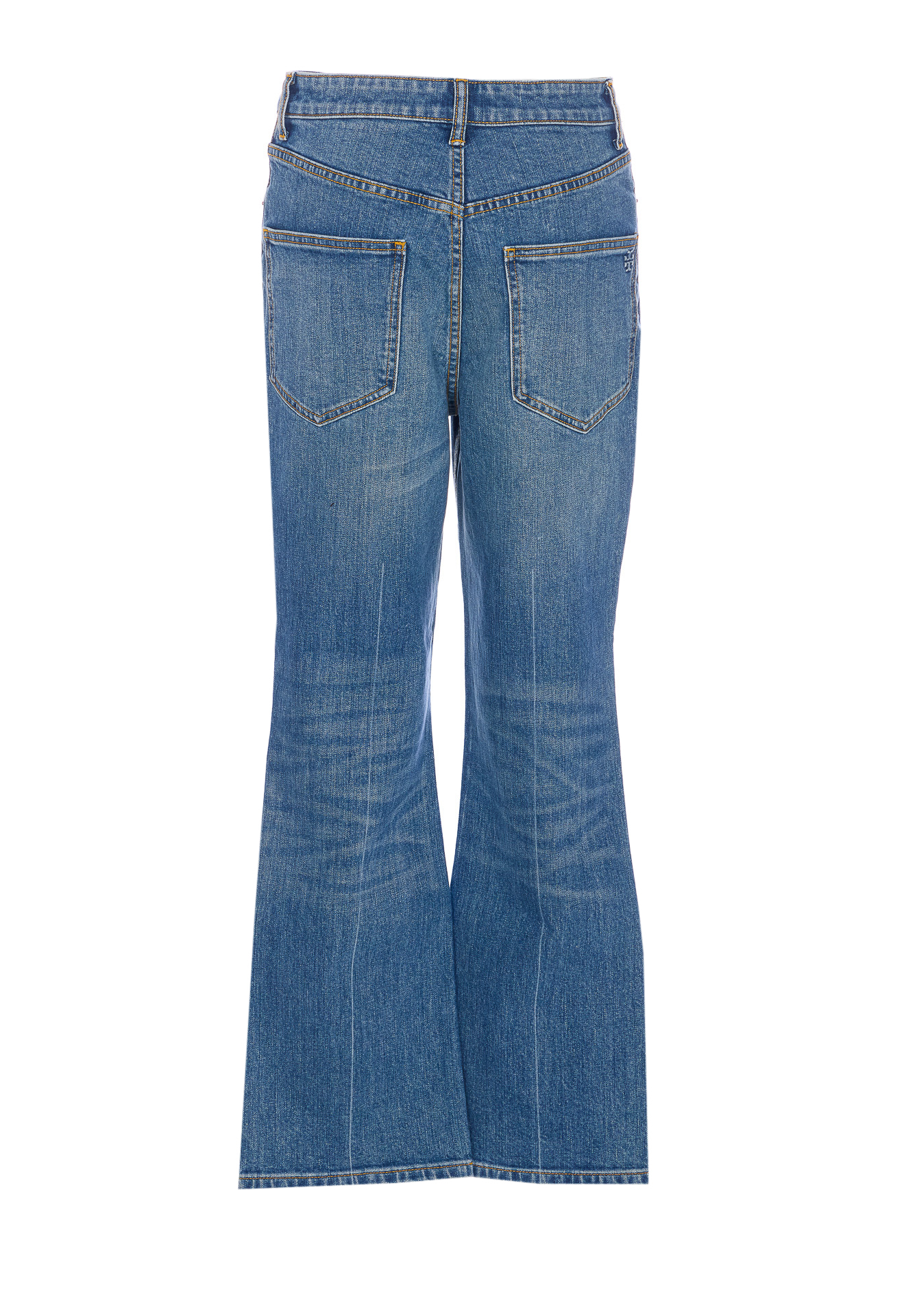
The quiet workhorses here are wallets and card cases. They are an easy impulse buy, cheap to post, and tough enough to see out several owners. Observed retail for current equivalents runs from about $95 for a flat card case to about $260 for a quilted continental wallet, and used prices sit well below that. Resale for tory burch clothing runs thinner and slower, since sizing risk, seasonality and fabric wear all weigh on a remote buyer. Knitwear in merino and cashmere, along with the in-house denim, holds up best, thanks to recognisable construction and forgiving fit. The runway is not a separate diffusion label, so a garment sold as a runway exclusive is usually a main-line piece from a show season.
Observed Resale Ranges as of September 2026
The table pulls together asking-price ranges reported by a single market-data aggregator whose methodology is not fully disclosed. Read it as a single source’s summary, not a market index, since no brand-level resale index for this label could be identified. The retail column shows observed prices for the nearest current equivalent, which means the two columns are not measuring the same object. Age and condition of the used pieces in the sample are unknown, while a number of the current equivalents are redesigns of what is actually being resold. The season and the current promotion both push these ranges wider or narrower. Every figure is directional and not a valuation of any specific item.
| Item | Observed secondhand asking range | Closest observed retail |
|---|---|---|
| Fleming quilted styles | $120 to $300 | Crossbody $470, Carryall $695 |
| Kira shoulder bags and crossbodies | $100 to $280 | Quilted shoulder styles $450 to $595 |
| Miller sandals | $60 to $140 | Miller Sandal $200 |
| Reva ballet flats | $50 to $120 | Relaunched Reva reported $330 to $350 |
| Wallets and card cases | $35 to $120 | $95 to $260 across current styles |
Where the Listings Land
Almost no other variable moves the number as much as platform choice. Poshmark is the strongest fit for this brand’s buyer and charges around twenty percent on sales above fifteen dollars. eBay carries the highest volume and the widest condition spread, making it the best gauge of demand and the worst gauge of quality. The RealReal consigns and authenticates in house, so sellers keep less and buyers pay more, and authenticated listings clear higher than unauthenticated ones. Between them sits Mercari at around ten percent, with ThredUp, Vestiaire Collective and Depop splitting the same traffic. Rebag and Fashionphile lean toward higher-tier houses and accept this label selectively. For genuinely old pieces, 1stDibs now and then lists archive items priced on scarcity rather than condition.
What Pushes a Price Down
Nothing weighs on this market more than counterfeiting. Because the brand is copied so widely and buyers are aware of it, that uncertainty appears as a discount wherever no authentication happens. Two common buyer tests make things worse. The first is country of origin: China, Italy and Portugal are all genuine production origins for this brand, Vietnam and India circulate too, and a Made in China stamp is therefore no evidence of a fake. The hunt for a serial number is the second, and sources contradict each other outright, some consignment authenticators saying the bags carry none and others describing an interior tag with a style and production code rather than a unique serial. No official brand-run authentication service could be identified, and the published guidance is channel-based rather than marker-based. A dust bag, hangtag or box proves nothing, since all three are counterfeited and sold separately.
Reading Resale Next to Retail and Discount
A used asking price only means something next to what the piece costs new and on promotion. A recurring semi-annual event is part of the calendar here, and coverage of the July 2026 edition described sandals under $100 and reductions of up to about half. Deeper figures of up to seventy percent belong to promotional copy rather than to any guarantee. Because a genuine tory burch sale runs seasonally, tiered site-wide promotions are not permanent. A tory burch outlet network exists physically, concentrated in premium outlet centres, but the company states plainly that it operates no online outlet, so any site claiming to be one is not the brand. Off-price retail shifted in 2026: Nordstrom Rack and TJ Maxx are still legitimate, whereas Saks OFF 5TH shut its e-commerce operation down completely after Saks Global’s bankruptcy early that year and now amounts to roughly a dozen physical clearance locations.
What You Should Not Read Into This
None of this is investment advice, and none of it should support buying anything in the expectation of a return. There is no clearing price in secondhand fashion and no asset class either, and nothing about this brand resembles a value-retaining hard-luxury object. Every number here is an observed asking price drawn from a small, uneven sample, not a completed sale, and asking prices routinely sit above what sellers actually accept. Condition, colour, season, platform, photography and timing all shift a listing far more than the model name does. No published brand-level resale index could be confirmed, which leaves no authoritative benchmark to check against. Buy pieces in order to use them, price them honestly once you are finished, and treat whatever comes back as a rebate and not a yield.


